
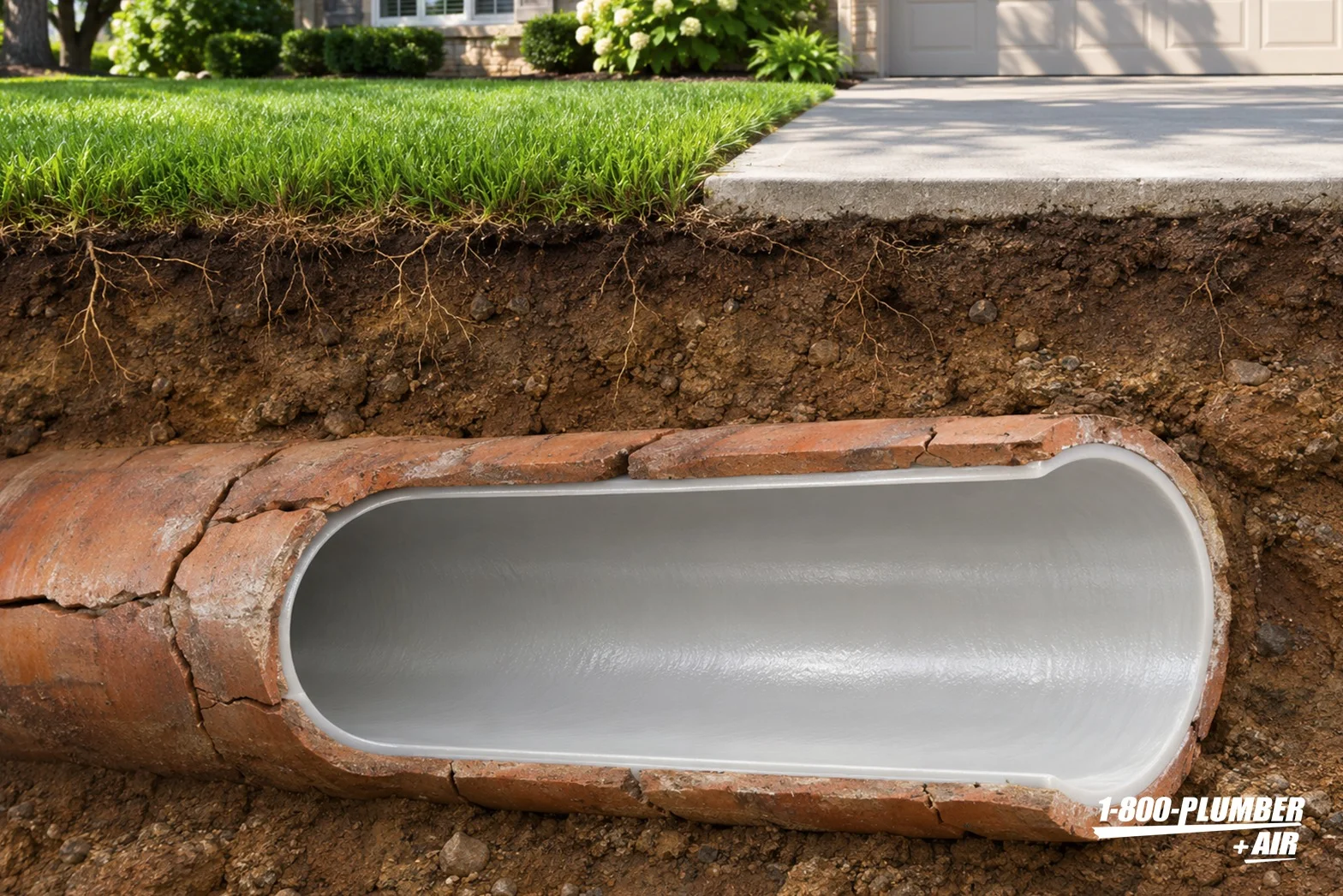
Trenchless sewer repair fixes a broken underground pipe without digging a deep trench across your yard. A plumber checks the line with a camera, clears out roots and grease, and seals a resin liner inside the old pipe. Most jobs finish in one or two days and leave your lawn intact.
Trenchless sewer repair lets a licensed crew fix a cracked main line from the inside out. Instead of tearing up your yard, plumbers work through an outdoor cleanout cap or one small access hole. You get a brand-new inner pipe wall without losing your grass or patio.
What Is Trenchless Sewer Repair?
This no-dig method restores damaged sewer pipes buried under your property. Most homeowners think a broken sewer pipe means heavy backhoes and ruined grass. Two common no-dig methods prevent that mess:
- With cured-in-place pipe (CIPP) lining, a crew puts a resin-coated felt tube inside the old pipe. They inflate the tube using air or water pressure, then cure it so it forms a smooth new inner wall.
- Pipe bursting breaks apart the old pipe with a cone-shaped head while pulling a new plastic pipe into place.
When your pipe still holds its round shape, trenchless sewer repair with pipe lining is the go-to fix.
What Happens During Trenchless Sewer Repair
Knowing each step helps you plan and ask smart questions before work starts. Here is how a licensed crew handles the job.
Step 1: Sewer Camera Inspection
Every trenchless sewer repair starts with a live video check. A plumber pushes a waterproof camera down your main cleanout to spot cracks, tree roots, offset joints, or standing water—similar to a sewer camera inspection before buying a house.
This check proves if your pipe can hold a liner. If the pipe has caved in or sunk into a deep dip, a soft liner will follow that dip and trap waste.
Step 2: Hydro Jetting and Pipe Cleaning
Next, the crew cleans out the inside of the old pipe. Plumbers use high-pressure hydro-jetting to remove grease, scale, and tree roots so the new liner will stick properly.
Many homeowners don’t realize just how clean the old pipe needs to be before lining begins. If any roots or rough spots are left behind, they can cause bumps that slow down the drains later.
Step 3: Pipe Lining and Hydraulic Placement
After cleaning the pipe, plumbers measure its length and width. They soak a custom liner in a two-part epoxy resin. Then, the crew uses air pressure or a hydraulic drum to push the liner into the old pipe and cover the leak.
An inner bladder inflates like a long balloon and presses the wet liner tightly against the inside of the old pipe. After that, heat, steam, or UV light cures the resin, forming a seamless new pipe inside the old one.
Step 4: Final Camera Check
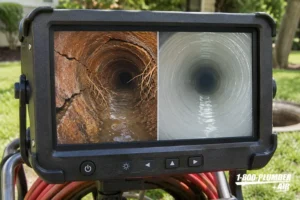
After the resin hardens, the crew deflates and removes the bladder. Then, a plumber uses a camera to inspect the pipe and confirm it is smooth and leak-free before turning the water back on.
Trenchless Sewer Repair vs. Traditional Digging
Choosing between trenchless sewer repair and traditional digging depends on your pipe’s condition, yard layout, and your preference for minimizing disruption.
| Factor | Trenchless Pipe Lining | Traditional Open-Trench Digging |
| Yard digging needed | 1–2 small holes or existing cleanout | Deep trench along the entire pipe |
| Job timeline | 1 to 2 days | 3 to 5+ days plus yard repair |
| Surface damage | Very low; lawns and driveways stay intact | High; needs new sod or concrete work |
| Best pipe condition | Cracked or root-filled pipes still aligned | Collapsed, crushed, or deeply sagging pipes |
| Expected lifespan | 50 years or more per NASSCO standards [https://www.nassco.org/wp-content/uploads/2023/04/NASSCO-CIPP-Specification-Guideline_2023.pdf] | 50+ years with new PVC pipe |
Trenchless sewer repair protects driveways, porches, and mature trees when your pipe still holds its round shape.
Expert Sewer Diagnostics With 1-800-Plumber +Air
At 1-800-Plumber +Air, our licensed plumbers start every sewer job with a live video camera check so you see what is happening underground. We show you the footage and explain whether trenchless lining or targeted digging is the best fit for your pipe.
Final Thought
Want to find out if your sewer line can be fixed without digging? Call 1-800-Plumber +Air at 1-800-758-6237, book a video inspection with our sewer services team, or check out our trenchless pipe lining services at select locations.
FAQ’S
How long does trenchless sewer repair take?
Most trenchless sewer repairs for homes take one or two days. If it’s a simple liner from one cleanout to another, it usually cures in just a few hours. Jobs with deeper pipes that need small access pits might take an extra day.
Will trenchless sewer repair work on a collapsed pipe?
No. For a liner to work, the pipe needs to be open so the liner can slide through, and the outer wall must be solid to keep its shape. If your pipe has collapsed or sunk a lot, it’s safer to use traditional digging.
How long does a trenchless sewer liner last?
A properly cured pipe liner is built to last 50 years or longer, according to NASSCO’s CIPP specification guidelines. Because the finished tube has no joints or seams, tree roots cannot easily sneak back in.
Does trenchless sewer repair mean zero digging?
In many homes, plumbers work right through an outside cleanout cap with zero yard digging. If your home lacks a cleanout, the crew only digs one or two small access holes instead of trenching your whole lawn.