
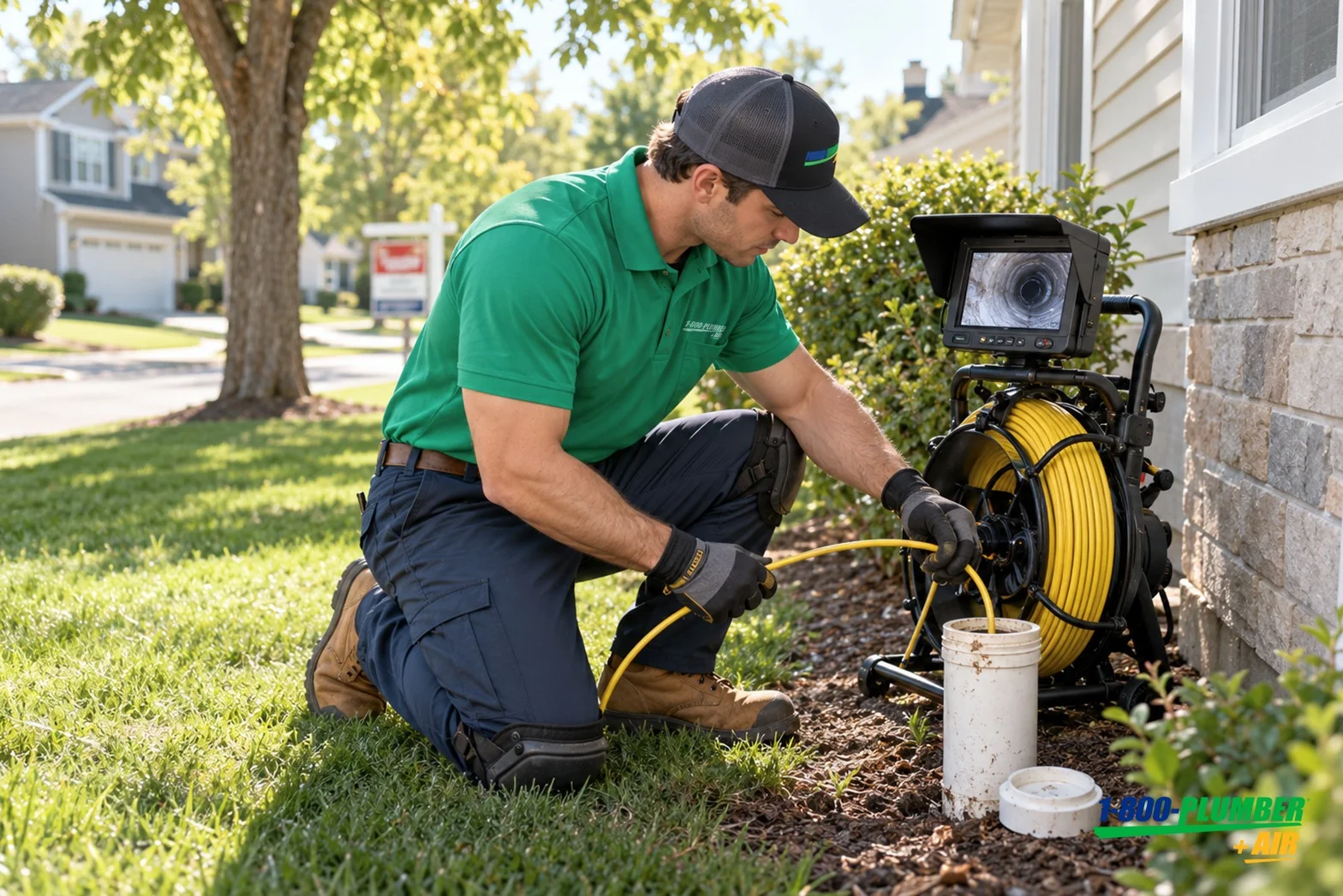
A sewer camera inspection is worth it before buying a house, especially an older home or one with big trees in the yard. A home inspection doesn’t look inside the buried sewer line, but the camera can spot roots, cracks, or sagging pipe while you can still negotiate.
Many buyers skip a sewer camera inspection, even though it’s the only way to see inside a pipe you’ll own but never actually look at. If that pipe is cracked or has roots inside, it’s better to find out before closing, not after you have a backup.
What does the camera show?
A plumber inserts a small, waterproof camera into the pipe through a cleanout, a capped pipe near your house. You can watch the video as it happens. The camera usually shows:
- Tree roots growing in through the joints, which is common in older clay pipe.
- Cracks and breaks in the pipe wall.
- Bellies, low spots where the pipe has sunk, and water sits.
- Offset joints, where two pipe sections have shifted apart.
- Pipe material, such as clay, cast iron,n or PVC.
One catch: standing water in a belly can hide the bottom of the pipe, so a good tech notes it instead of calling the line clean.
Is it part of a home inspection?
Usually not, since a home inspector checks the faucets and toilets, but the buried line running out to the street stays out of sight, and InterNACHI’s sewer scope standards treat the scope as its own inspection.
That means you’ll need to book the sewer camera inspection separately, often with a plumber.
When is it worth it?
For most buyers, yes, but some homes make it a must, not a maybe.
| Situation | Risk | Our take |
|---|---|---|
| Older home with clay or cast-iron sewer pipe | High | Get it |
| Large trees between the house and the street | High | Get it |
| Slow drains or gurgling during your showing | High | Get it |
| Newer home with a PVC line | Lower | Still worth a look |
If the home is older, has big trees, or drains slowly, a sewer camera inspection before buying a house is worth every dollar.
What if it finds a problem?
A bad sewer line is something to negotiate with the seller, not always a reason to walk away.
- Get the video, along with distance marks showing where each problem appears.
- Get a written repair quote, and use our guide on how to compare plumbing quotes to check it.
- Talk to the seller before closing about a repair, a lower price, or a credit.
- Know your limit, since a collapsed line is a big job, and it’s better to find that out before you sign.
A problem found before closing is a bargaining chip, but the same problem found after closing is your bill.
Why 1-800-Plumber +Air?
Our plumbers run the camera, walk you through the video, and provide written findings to share with your agent. If the line needs work, our sewer line services cover repair and replacement.
Final thoughts
For most buyers, yes, because it’s a small cost next to one of the biggest repair bills a house can hand you.
Buying a home soon? Call 1-800-758-6237 or find your local 1-800-Plumber +Air to book a sewer camera inspection before your inspection period ends.
FAQs
What is a sewer camera inspection?
It’s a video check of the buried pipe that runs from your house to the city sewer, looking for roots, cracks, sags, and blockages.
Is a sewer scope part of a home inspection?
No, it’s a separate service. Some home inspectors offer it as an add-on, or you can book a plumber.
Who pays for a sewer camera inspection when buying a house?
Usually the buyer, since it’s part of your inspection period. If the sewer camera inspection finds damage, you can ask the seller to cover the repair.
Does a new house need a sewer scope?
The risk is lower with a new house, but problems can still happen. Sometimes settled soil or leftover building debris can show up on the camera.
What is a belly in a sewer line?
A belly is a low spot in the pipe where it has sunk. Water and waste can gather there, which may lead to slow drains or backups.