
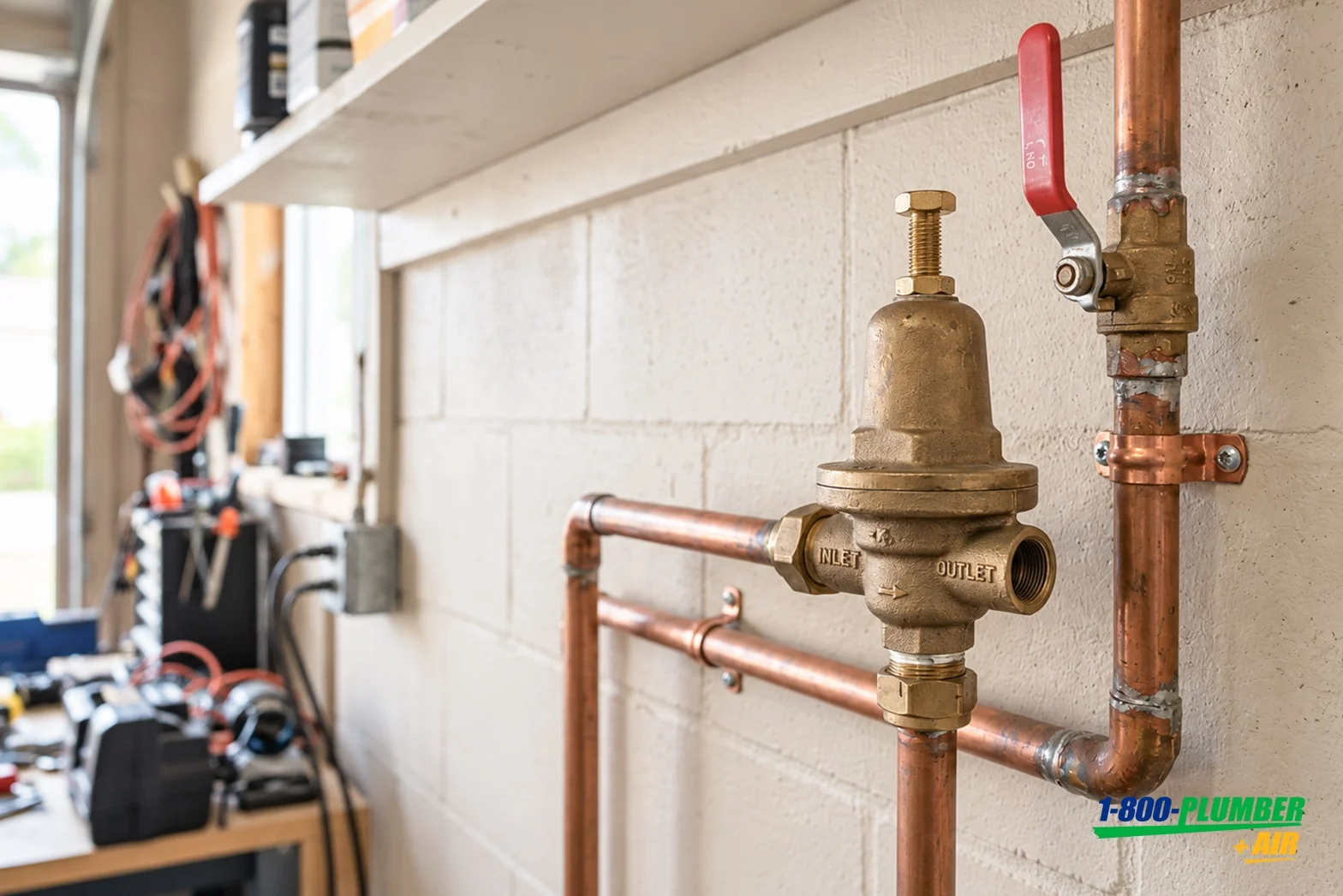
TL;DR: A water pressure regulator is a bell-shaped valve on your main line. It turns high street pressure down to a steady, safe level for your pipes and appliances. When it wears out, you’ll hear banging pipes, see pressure swings, or find drips at toilets and the water heater.
A water pressure regulator is one of those parts most people never notice until something drips. It sits near your main shutoff and does one job all day. When it quits, the whole house feels it.
What Does a Water Pressure Regulator Do?
Water from the city main can enter your home with more pressure than your plumbing can handle. A regulator, also known as a pressure-reducing valve or PRV, uses a spring and a rubber diaphragm to lower that pressure.
It usually sits just past the main shutoff and looks like a brass bell with a screw on top. Under the International Plumbing Code (Section 604.8), a regulator is required when street pressure tops 80 psi.
If your street pressure runs high, this one valve protects every pipe and fitting in your home.
What are the signs of a failing water pressure regulator?
Regulators wear out from the inside. Sediment clogs the screen, the diaphragm stiffens, and the spring gets weak.
Banging Pipes
A loud knock when a valve snaps shut is called water hammer. Too much pressure behind the water makes it much worse.
Pressure Swings
The shower runs strong, then weak, then strong again. A healthy regulator holds steady no matter what else is running.
Weak Flow
If every tap is weak at once, the valve may be stuck, or its screen clogged. If it’s just one sink, our guide to common causes of low water pressure can help you narrow it down.
Running Toilets
Toilet fill valves and faucet parts are built for moderate pressure. When pressure creeps up, they hiss, run, or drip, even after you replace them.
Heater Leaks
If the relief valve on your water heater drips after a long shower, pressure is building in the system. A water heater service visit should also check the regulator.
Wet Regulator
Moisture or green crust around the bell means the internal seals are failing. That leak won’t fix itself.
One sign alone can have other causes, but two or more usually point back to the regulator.
How do you test your water pressure at home?
You don’t need a plumber for a first reading. Here’s the quick version:
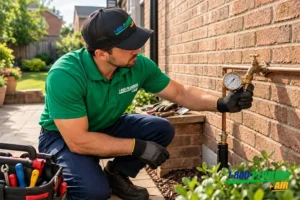
- Screw a pressure gauge onto the outdoor spigot nearest the main line.
- Make sure no water is running in the house.
- Open the spigot all the way and read the gauge.
- For a better picture, use a gauge with a red “max” needle and leave it on overnight.
Step 4 is the one people skip. A water pressure regulator can read fine at noon and still let pressure spike at night while the water heater reheats.
What does your gauge reading mean?
| What you see | Likely cause | What to do |
|---|---|---|
| Steady and under 80 psi | Regulator is working | Recheck once a year |
| Over 80 psi | Regulator failed or set too high | Have a plumber reset or replace it |
| Climbs overnight | Heated water has nowhere to go | Have the expansion tank checked |
| Low at every fixture | Regulator stuck, or screen clogged | Clean the screen or replace the valve |
Water expands when it heats up. In many homes with a regulator, that extra water can’t flow back to the street, so pressure climbs. That’s why plumbing codes call for thermal expansion control, usually an expansion tank.
A high overnight reading doesn’t always mean a bad regulator, so check the expansion tank first.
Why Call 1-800-Plumber +Air
What we see on these calls is rarely one bad part. The regulator, expansion tank, and water heater relief valve work together, so our plumbers test all three in one visit.
- A gauge reading, plus an overnight check when needed
- A clear answer on adjust, rebuild, or replace
- Upfront pricing before any work starts
Final Thoughts
A failing water pressure regulator rarely breaks all at once. It shows up as small problems that turn into leaks and worn-out appliances. If you’ve spotted two or more signs, find your local 1-800-Plumber +Air office or call 1-800-758-6237 to get your water pressure regulator checked.
FAQ’s
How long does a water pressure regulator last?
There’s no single number. Hard water and sediment wear a water pressure regulator out faster, so if yours is original to an older home and showing signs of wear, have it checked.
What should my home water pressure be?
It should stay steady and under the 80 psi code limit. Your plumber can set the right level for your fixtures and appliances.
What should I do about low water pressure?
Check if all taps or just one have low water pressure. If it’s everywhere, contact a professional to inspect your water pressure regulator—stuck valves or clogged screens are common causes. If only one fixture is affected, clean the aerator or showerhead.
Can I adjust my pressure regulator myself?
Turn the screw on top to adjust the setting up or down. Make small adjustments and check each time with a gauge. If the setting does not stay in place, replace the valve.
Do I need an expansion tank with a pressure regulator?
Often, yes. A regulator can trap heated water in the house, and an expansion tank gives it room so pressure doesn’t spike.