
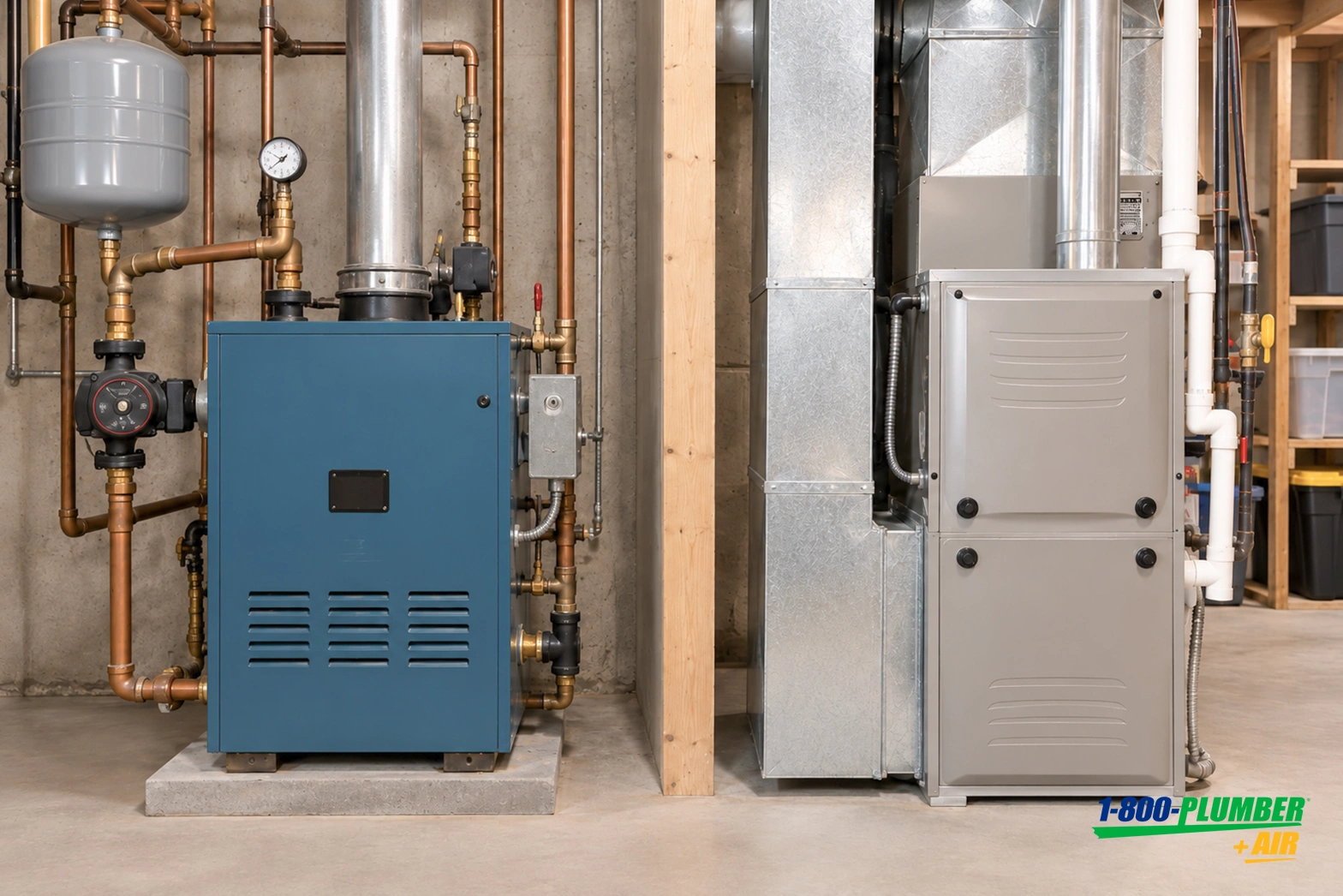
A home’s heating system often depends on its age. Houses built before 1950 usually have boilers with pipes and radiators. Later, when central air and ductwork became common, builders began using furnaces instead.
Have you ever walked into someone’s house and felt the warmth right away? In one home, a cast-iron radiator under the window ticks and hisses on a cold morning. In another, a floor vent turns on, and warm air flows past your feet.
That is the boiler vs furnace difference, and it is not random. Older streets tend to be full of radiators. Subdivisions built in the last thirty years are almost all vents: same country, usually the same fuel, completely different equipment in the basement.
What’s the difference between a boiler and a furnace?
Both are central heating systems. Both usually run on natural gas, oil, or propane. The difference lies in what they heat and how that heat reaches you.
A boiler heats water. A furnace heats air. That one distinction explains nearly everything else, including why one house has radiators along the baseboards, and another has vents in the floor.
How a boiler heats your home
A boiler heats water in a closed chamber and then moves it through pipes to radiators, baseboard heaters, or tubes under the floor. The heated metal radiates warmth into the room. Steam systems use a similar idea, but they send steam instead of hot water. Experts call this type of system hydronic heating.
No blower or ductwork is involved, which is why boiler heat feels steady and quiet. It also takes longer to warm a cold room, and it holds warmth longer after the system shuts off.
How a furnace heats your home
A furnace burns fuel inside a sealed metal part called a heat exchanger. A blower moves air from your home over this hot surface, and the warm air then flows through ducts to the vents in each room.
Forced air heats a room fast. You feel it within a few minutes. You also hear the blower start up, and in midwinter you may notice the air getting dry.
Why do older homes have boilers?
Space is one of the main reasons these systems are common in older homes. Small heating pipes fit much more easily behind plaster walls and through tight framing than bulky ductwork.
Hot water or steam travels through these pipes to radiators, providing steady, even heat throughout the home without large ducts or a blower.
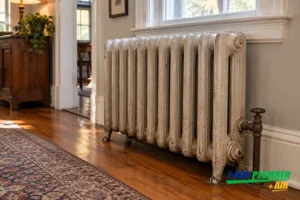
This type of heating is still common today. Of roughly 20.3 million U.S. homes built before 1950, about 3.7 million use steam or hot-water heating—close to 1 in 5 homes, according to the U.S. Energy Information Administration.
Why did newer homes switch to furnaces?
Furnaces work well in homes that already have ductwork for central air conditioning. These ducts can carry both warm and cool air, so you do not need extra pipes or radiators.
Forced-air systems can heat rooms quickly and work well with modern thermostats and open floor plans. Since they are convenient, heat up fast, and use shared ductwork, furnaces are a common choice in newer homes.
Central warm-air furnaces are now the most common main heating equipment in U.S. homes.
How do you know which one you have?
You can settle this in about two minutes, with no tools.
- Radiators, finned baseboard units, or warm floors, with pipes running out of the equipment: boiler
- Vents in the floor, wall, or ceiling that blow air, and a tall metal cabinet with a filter slot: furnace
- A pressure gauge, and sometimes a small glass tube on the side of the unit: boiler
- A thermostat that runs your central air conditioning through those same vents: furnace
If your home has radiators and window air conditioners, you almost certainly have a boiler.
What warning signs should you watch for?
Boilers and furnaces can show different signs when something is wrong.
Boiler Warning Signs
- Radiators not heating properly
- Banging or knocking noises from pipes
- Water leaking around the boiler
- Frequent on-and-off cycling
Furnace Warning Signs
- Yellow or orange burner flame as opposed to a blue one
- Weak airflow or uneven heating
- Unusual burning smells
- Blower running but producing cool air
If you smell gas, notice soot on the machinery, or the carbon monoxide detector goes off, leave the premises and call the gas company for help.
What can you safely do yourself?
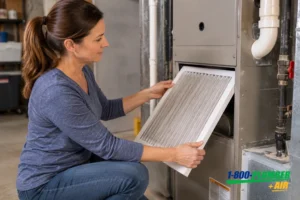
There are a few simple heating maintenance tasks that homeowners can do themselves:
- Check the condition of the furnace filters and replace them if necessary.
- Make sure vents and radiators are not blocked
- Check the thermostat settings and change their batteries if needed.
- Test your carbon monoxide alarms regularly to make sure they work
- Bleed your radiators if you notice cold spots or hear gurgling sounds
What should you leave to a technician?
- Anything touching the gas line, gas valve, or burner assembly
- The pressure relief valve on a boiler
- The heat exchanger, cracked or otherwise
- Draining or refilling a boiler when you do not know the correct fill pressure
- Any repair that means removing a sealed panel with a warning label on it
Gas heating equipment produces carbon monoxide, which you cannot see or smell. Guesswork is not worth the risk.
Should you replace a boiler with a furnace?
In most cases, you don’t need to replace a boiler with a furnace. The conversion requires installing ductwork throughout the home, which can be expensive and disruptive.
If your boiler is old, replacing it with a modern, energy-efficient boiler is often the simpler option. However, if you’re already planning a major renovation, it may be worth comparing the cost and benefits of both systems before deciding.
Final thoughts
The houses typically have boilers and radiators, while newer houses usually have furnaces and ducts. No single system is ideal for everyone. The best decision depends on individual circumstances.
Proper maintenance improves heating system efficiency. If you notice uneven heating, strange noises or smells, or cycling, have your system checked.
Need a professional to look at your boiler or furnace? Schedule heating service with your local 1-800-Plumber +Air team, or call us any time, day or night.
FAQ
Is a boiler better than a furnace?
When comparing boiler vs furnace systems, neither is always better. Boilers provide steady, quiet heat, while furnaces heat rooms quickly and can use the same ductwork as your air conditioning.
Can you have a boiler and central air conditioning?
Yes. Older homes often have a separate air-conditioning system with its own compact ducts and air handler, or ductless mini-splits that require only a small opening through the wall. Your boiler keeps handling the heat.
Why does my house have radiators but no vents?
Because it was built before ducted heating and cooling became normal. The original heating design used pipes to distribute hot water or steam, so there was no need to install ductwork.
Do boilers last longer than furnaces?
In fact, yes. They have fewer moving parts than furnaces and do not require a blower motor and duct system. But their longevity depends on water quality and good maintenance.