
A slab leak is a broken water or heating pipe buried in the concrete under your floor. Warning signs include a warm patch of floor, a water meter that moves with every tap, the sound of running water, and damp flooring. On Long Island, older slab houses with heating pipe in the concrete deserve a closer look.
A slab leak can run for months in a New York home before anyone sees a drop, because the pipe sits under several inches of concrete. Most houses here have basements, so plenty of owners assume this can’t happen to them.
That’s not quite true on Long Island, where many post-war homes sit on a slab. Here’s what to check.
What is a slab leak, and why do New York homes get them?
It’s a leak in any pipe under or inside a concrete floor: a water line, a drain, or in some older Long Island houses, the heating pipe itself.
Levittown is the local example. Hempstead changed its code in 1947 to allow homes without basements, and Levitt poured slabs with copper radiant heat tubing inside and no vapor barrier underneath, according to the Journal of Light Construction. That copper corroded fairly quickly, and leaks often soaked into the ground without anyone noticing.
Local heating pros say most of those radiant systems were later swapped for baseboard heat. Some originals still run, though, and they leak in ways a basement house never would.
If your house has no basement and was built after the war, find out what runs through your floor.
What are the signs of a slab leak?
Most slab leak warning signs are quiet. Check them in this order.
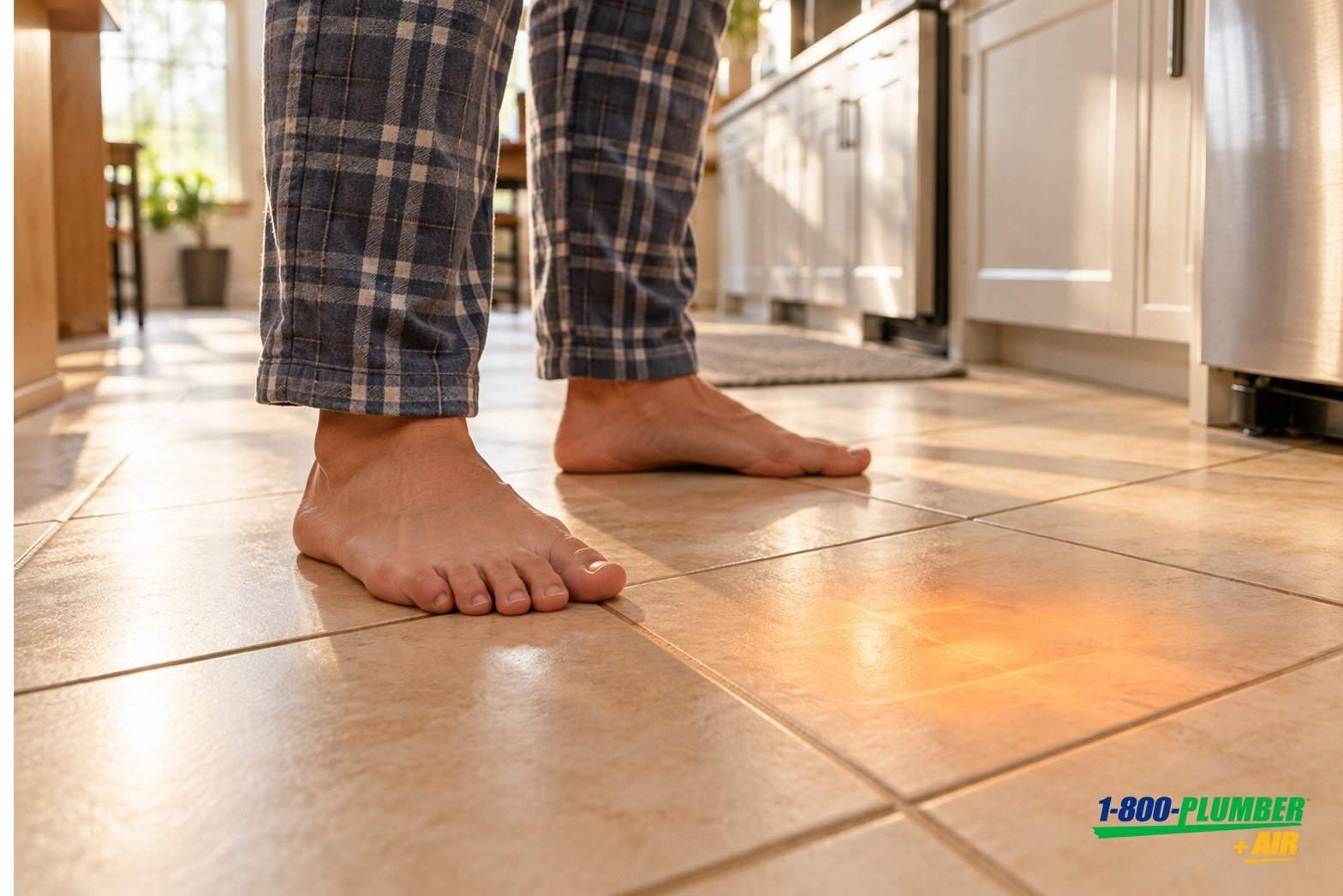
- A warm spot on the floor. Walk the house barefoot. Warm tile with the heat off often means a hot water line is leaking below.
- A meter that won’t sit still. Turn off every fixture and watch the meter for two hours. Our water meter test guide shows you how.
- Running water you can’t find. Late at night, listen near the kitchen and bathroom floors for a faint hiss.
- Damp carpet or cupped flooring. Lifting laminate at the seams or a musty smell at the baseboards points to water rising from below.
- New cracks in the floor or walls. Water washing out soil under the slab can let it shift.
- A boiler that keeps losing pressure. In a radiant slab house, a gauge that keeps dropping, or an auto-fill that keeps feeding water, can mean the heating loop is leaking.
That last one is the sign we see homeowners miss most. They top up the boiler for months and never connect it to the floor.
Is it a slab leak or something else?
One sign alone can have an ordinary explanation. Use this table to sort them out.
| Sign | Points to a slab leak if… | Could also be… |
|---|---|---|
| Warm floor spot | It stays warm with the heat off | Sun on tile, radiant heat working normally |
| Moving water meter | It moves with every fixture off | A running toilet or irrigation timer |
| Damp flooring | There’s no plumbing above it | A spill, condensation, or groundwater |
| Sound of water | It’s at floor level, overnight | A toilet refilling or the water heater |
| Boiler pressure drop | No leak shows at the boiler or radiators | A failing relief valve or expansion tank |
Two signs together, especially a moving meter plus a warm spot, are worth a call the same day.
What should you do if you suspect a slab leak?
- Perform the meter test and photograph both readings.
- If you see water coming up through the floor, turn off the main valve.
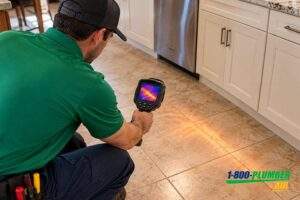
- Do not break the concrete. Instead, a plumber can use acoustic equipment and a thermal camera to check for leaks first.
- Ask about every fix: a spot repair, a reroute through the walls, or a whole-home repipe if the copper is failing everywhere.
Finding the exact spot first is what keeps a slab repair from becoming a torn-up kitchen.
Why 1-800-Plumber +Air of Central Long Island and Babylon
Our Farmingdale team covers Hempstead, Hicksville, Wantagh, and Massapequa, and our Babylon office covers Islip, Brentwood, and Patchogue. We handle water leak detection and repair24/7k.
Final thoughts
Slab leaks are hard to spot at first, but they do leave signs. Look for clues on your floor, check your water meter, and check the boiler gauge.
If you notice anything unusual, call 1-800-Plumber + Air at 631-350-5400. We’ll find the slab leak before it damages your floors.
FAQ’s
What is a slab leak?
It’s a leak in a pipe that runs under or through the concrete slab your house sits on. It can be a water line, a drain, or a heating pipe, and because it’s buried, it often goes unnoticed for a long time.
How do I know if I have a slab leak?
Turn off all the water and watch your meter. If it moves and you also have a warm spot or damp flooring, you likely have a slab leak. A plumber can confirm it without opening the floor.
Is a slab leak an emergency?
Sometimes it is. If you see water coming up or notice your water meter running quickly, turn off the main valve and call for help right away. Even a slow leak should be checked within a few days, not left for months.
Where is my main water shut-off valve?
Check where the water line enters your house, usually near the water meter. If you have a basement, it’s often on the front wall. In a slab-on-grade home, look in the garage, utility room, or near the water heater. It’s best to find it before you need it.
Does homeowners insurance cover a slab leak?
It depends on your policy. Some policies cover the damage and the cost to reach the pipe, but not the pipe itself. Call your agent before repairs start and take photos.