
The clearest signs you need a repipe are recurring leaks in new locations, rust-colored water, low pressure at every fixture, and original supply lines more than 40 years old. One leak is a repair. A pattern of leaks throughout the house indicates the pipe material itself is failing, and patching it only delays the next failure to another wall.
Here are the 5 warnings our plumbers see most, plus a simple way to tell a repair from a replacement.
What a whole-home repipe actually involves
A whole-home repipe replaces the water supply lines running through your walls, ceilings, and slab, usually with copper or PEX. Drain and sewer lines are a separate job. The crew cuts small access holes, runs fresh hot and cold lines, ties in each fixture, then pressure-tests. A repair fixes one spot. A repipe fixes the system.
5 Signs you need a repipe
1. Recurring Leaks
Finding one pinhole leak might just be bad luck. But if you find three in eighteen months, each in a different room, that’s a sign of a bigger problem. Pipes with thin walls tend to break where water pressure is highest, and the damage can spread. According to Triple-I, about 1 in 60 insured homes file a water damage or freezing claim each year, with the average claim costing around $13,954 between 2018 and 2022. If you’re already dealing with a leak, it’s best to call a professional for water leak detection.
2. Discolored Water
The presence of discoloration in water from multiple faucets may indicate a corrosion problem in the steel or galvanized piping. If this problem occurs only on the hot-water side, make sure to examine the anode rod in the water heater before concluding that it is due to the piping system.
3. Weak Pressure
If your pipes are clogged with corrosion or scale, you may notice that water flows more slowly throughout your whole house. If just one faucet has low pressure, the issue is usually with the aerator or a faulty valve. But if you have weak water pressure at the kitchen sink, shower, and hose bib all at once, your plumbing system likely has a bigger problem.
4. Outdated Materials
Galvanized steel pipe can rust from the inside, which is hard to spot. Polybutylene, a gray flexible plastic found in many houses built between the late 1970s and mid-1990s, is known for failing suddenly. Lead is mainly a health concern, not just a plumbing issue. The EPA says there is no safe level of lead exposure.
Any of these three materials is reason enough to plan a repipe, even if you have no symptoms today.
5. Aging Pipes
InterNACHI estimates the useful life of galvanized pipe at roughly 20 to 30 years and notes that corrosion occurs inside the pipe, where it is invisible. Copper lasts longer but starts throwing pinhole leaks with age. Original plumbing in a home built before the mid-1980s deserves a look.
Repair or repipe? Here’s the honest test
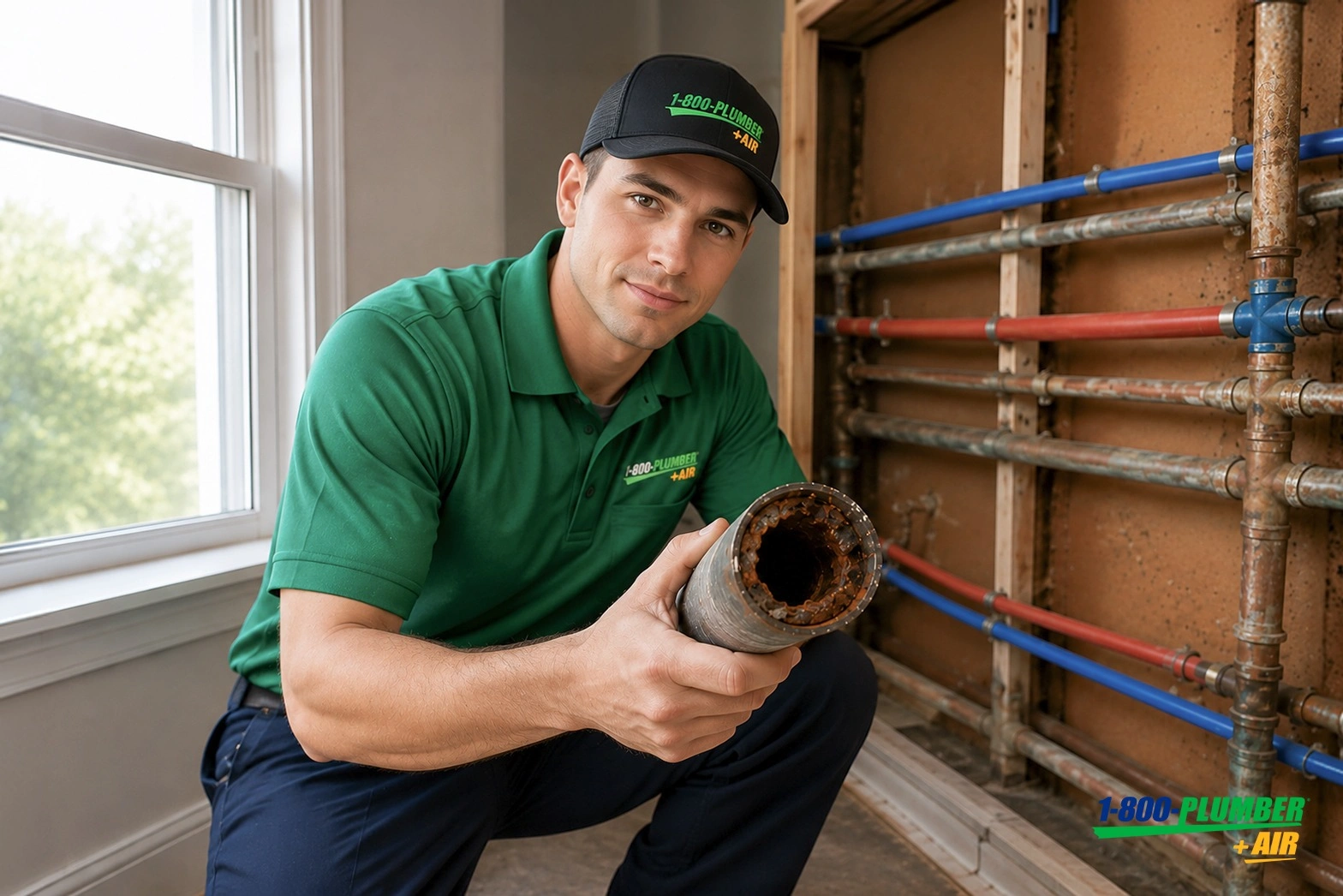
If you notice two or three signs that you might need to repipe, it often comes down to the numbers. Try adding up your plumbing repair costs from the last three years. If your expenses keep going up, leaks are happening in different rooms, and your pipes are older than expected, another repair is just putting money into a system that is already failing. You can ask your plumber to cut out a section and show you. A corroded galvanized pipe looks like a clogged artery inside, and seeing it for yourself usually settles the question.
What to expect on cost and timeline
In most cases, PEX is quicker and less expensive to install than copper. It’s also easier to work with pipes in the attic than in a slab foundation. Most repiping jobs take just a few days, and you usually have water each night. Be sure to ask if drywall patching and painting are included, since this is where quotes often differ. If a pipe bursts before you can schedule the work, having access to 24/7 emergency plumbing is more important than the price.
Final Thought
If you notice rusty water, frequent leaks, or reduced water pressure, consider repiping. Address these issues early can prevent costly repairs and more significant plumbing problems.

If you’re not sure how much longer your pipes will last, give us a call at 1-800-758-6237 or find your local 1-800-Plumber +Air Pro for a repipe assessment. Our licensed technicians offer upfront pricing before any work begins, and we’re available 24/7 if you need help right away.
FAQ
What are the signs you need a repipe?
One leak is normal. A pattern is not. Watch for leaks in different rooms, rusty water at more than one faucet, and weak pressure everywhere. If your pipes are galvanized steel, polybutylene, or lead, get a plumber to look.
How long does a whole-house repipe take?
In a few days for most homes, you should have water every night. Slab foundations, second stories, and finished basements take longer. Ask whether drywall patching and paint are included in the quote, since they can add a day or two.
Is repiping worth it, or should I keep repairing?
Repairs work fine when leaks stay in one spot. Once you are fixing a new leak every few months, you are paying to patch pipe that is already failing. Add up three years of repair bills and compare that to a repipe quote.
What is the best pipe material for a repipe: PEX or copper?
PEX is more affordable, flexible, and freeze-resistant. Copper is rigid, durable, and heat-resistant. Building codes permit either. The design of your house determines it most of the time, not preference.
Does homeowners insurance cover a repipe?
It covers the water damage if a pipe bursts. It does not cover replacing old pipes, since that counts as maintenance. If you are seeing the signs you need a repipe, plan for it as a home expense, not a claim.