
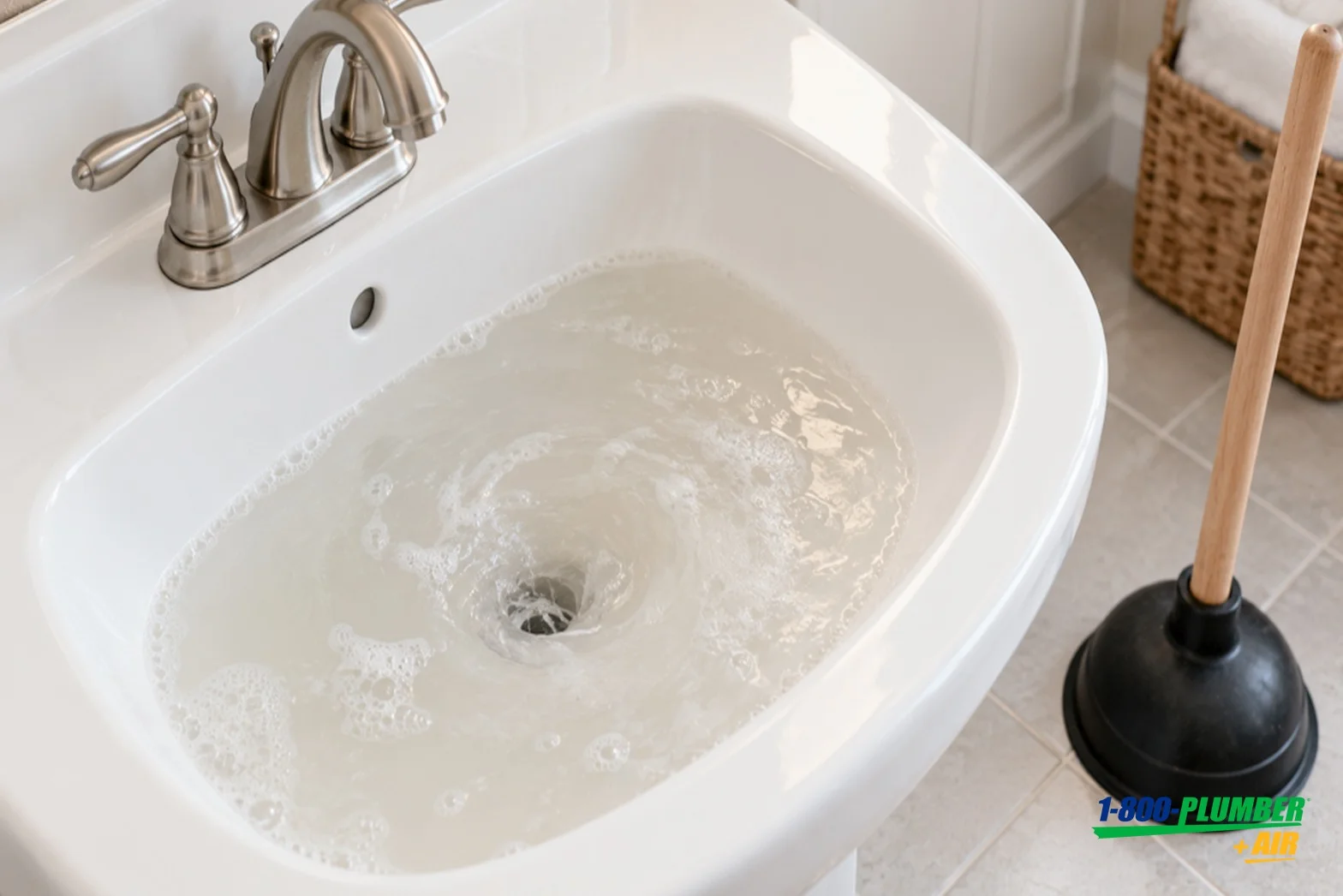
TL;DR: If your drain keeps clogging even after you clear it, the quick fix probably just opened a small gap in the blockage. Sticky buildup on the pipe walls remains, so new debris gets stuck quickly. If several drains slow down at the same time, or the clog returns within weeks, the real issue is usually the pipe itself.
Watching your drain clog a week again after you plunged it is maddening: you did the work, the water ran free, and now it’s pooling around your ankles in the shower again.
In practice, a recurring clog isn’t bad luck. It means the first fix never reached the real cause.
Why does a drain keep clogging right after you clear it?
Clearing a drain and cleaning a drain aren’t the same job. A plunger, plastic hair tool, or bottle of drain gel usually opens a narrow channel through the clog, so the water flows and it looks fixed.
But the grease, soap scum, and hair coating the rest of the pipe stay put, acting like tape that never loses its stick. Every rinse adds a little more until you’re back where you started.
Chemical cleaners make it worse. Our post on plumbing maintenance myths that cost homeowners money explains how harsh drain chemicals wear down pipe walls, leaving rough spots for the next clog to grab.
A clog that returns fast almost always means the pipe was opened, not cleaned.
What makes a drain keep clogging again and again?
Four causes show up on most repeat-clog calls, two about what goes down the drain and two about the pipe itself.
Buildup on the pipe walls
Kitchen lines collect grease, which goes down warm and hardens as it cools, while bathroom lines collect hair tangled in soap and conditioner. Both shrink the pipe a little at a time.
Wipes that don’t break down
Flushable wipes often get stuck on rough spots in pipes and trap anything that comes after them. According to a master plumber interviewed by Consumer Reports, clearing these blockages can cost from a few hundred to several thousand dollars.
A sag in the pipe
Drain lines need a steady downhill slope. The International Plumbing Code calls for at least a 1/4-inch drop per foot on drain pipes 2½ inches wide or smaller.
When a section settles into a low spot, called a belly, water and waste sit there and refill it every time you clear it.
Tree roots in the sewer line
Roots push into small cracks and loose joints in older sewer pipes, and a snake only cuts them back until they regrow.
Is it one drain or the whole house?
Here’s how we read the pattern on a service call:
| What you notice | Likely cause | Fix that lasts |
|---|---|---|
| One sink or tub slows again within days | Buildup or hair near the trap | Full line cleaning plus a drain screen |
| Kitchen sink clogs every few weeks | Grease buildup deeper in the line | Professional cleaning, less grease |
| Toilet and tub back up together | Main line blockage | Main line cleaning and camera check |
| Several drains gurgle after heavy use | Belly, roots, or a damaged sewer pipe | Camera check, then pipe repair |
When more than one fixture is involved, you’ll likely see the drain keep clogging no matter how careful you are, because the problem sits past the branch lines where you can’t reach it.
One slow drain is usually a cleaning problem. Several slow drains at once usually point to a pipe problem.
Which fix actually stops the cycle?
- Change the habits. Keep grease out of the sink, use a hair catcher in the shower, and throw wipes in the trash instead of flushing them.
- Get the line truly cleaned. Professional drain cleaning services scrub the pipe walls instead of poking through the clog, often with hydro jetting, a high-pressure water scour for grease-heavy lines.
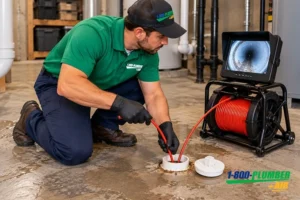
- Look inside before paying for repeats. A camera inspection shows whether a belly, crack, or root is causing the drain to keep clogging.
- Repair the pipe. If the camera finds damage, sewer line repair can end the cycle.
Paying for the same clearing every month costs more than one visit that identifies what keeps the drain clogging.
Why call 1-800-Plumber +Air about repeat clogs?
Our technicians do more than fix water flow. They find the cause of the clog, repair damaged pipes, and offer yearly cleanings and inspections to prevent buildup before it becomes a bigger issue.
Final Thought
A repeat clog is a symptom of buildup, wipes, a sagging pipe, or roots, and only fixing that cause keeps the drain clear.
Tired of watching your drain keep clogging? Call 1-800-758-6237 or find your local 1-800-Plumber +Air and book a cleaning that addresses the cause.
FAQ’s
What is the strongest thing to unclog a drain?
Professional hydro jetting is the strongest option. It scours the entire pipe wall with high-pressure water, so it works when the drain keeps clogging after store-bought fixes.
Can I pour vinegar down the drain to unclog it?
Vinegar and baking soda can help loosen a new, light clog. They won’t remove tough grease or a clump of hair, so if the clog returns, the pipe still has buildup.
How do I know if the clog is in my main line?
If you notice more than one fixture having problems at the same time, such as the tub filling up when you flush the toilet or the sink making gurgling sounds, it usually means there is an issue with the main line instead of just one drain.
Can a plumber stop a drain from clogging for good?
Often, yes, once the cause is found. We clean out buildup, change habits, and repair damaged or sagging pipes—a camera inspection usually shows you what you need.
How often should I have my drains cleaned?
Many homeowners book a yearly cleaning and inspection. A busy kitchen or an older sewer line may need it sooner.